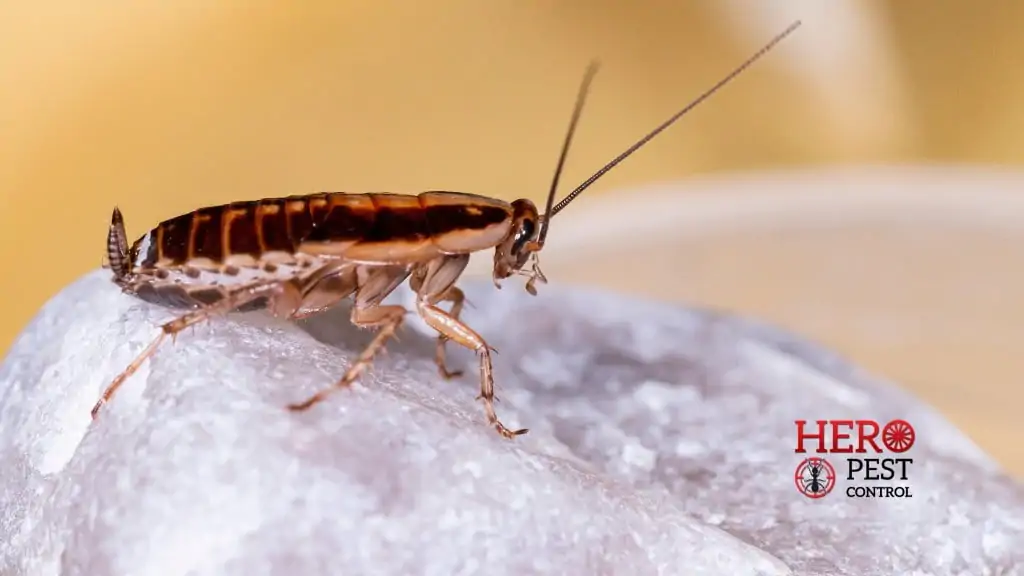
Cockroaches are good at staying out of sight. Most species are primarily active at night and spend the day inside cracks, cupboards, appliances and other protected areas. This means an infestation can develop before you start seeing cockroaches regularly.
Knowing where cockroaches hide can help you find early signs such as droppings, egg cases, cast skins and live insects. If you are already finding repeated activity around your kitchen or other rooms, our cockroach pest control Melbourne service can help identify where the infestation is concentrated.
Quick Answer: Where Do Cockroaches Usually Hide?
Common cockroach hiding places include kitchen cupboards, spaces behind appliances, areas beneath sinks, cracks around walls and cabinetry, electrical equipment and undisturbed furniture or storage areas.
The exact location depends partly on the species. German cockroaches commonly favour warm and humid kitchen areas, while some larger cockroach species are more likely to occupy roof voids, wall cavities, subfloors, drains or outdoor areas.
1. Kitchen Cupboards and Cabinets
Kitchens provide cockroaches with easy access to food, water and sheltered hiding places, making cupboards one of the first areas worth checking.
Cockroaches may hide:
- inside cracks between cupboards
- under shelving
- around hinges and joins
- behind drawers
- near plumbing penetrations
- around stored food
German cockroaches are particularly associated with kitchens. Victorian Department of Health guidance notes that they commonly hide under sinks, in cupboards and drawers, and around electrical equipment such as refrigerators.
Emptying cupboards occasionally and cleaning food residue can make the area less favourable. Keep dry foods in sealed containers and investigate any unexplained droppings or spotting around corners and cupboard joins.
2. Behind Refrigerators and Other Kitchen Appliances
Appliances can create ideal cockroach harbourage because they often provide warmth, narrow spaces and protection from disturbance.
Areas worth inspecting include:
- behind refrigerators
- underneath ovens
- around dishwashers
- beneath microwaves
- around coffee machines
- inside or around toasters
Food crumbs and grease can also collect underneath appliances where normal cleaning does not reach.
Where it is safe and practical, clean around movable appliances periodically. Look for cockroach droppings, cast skins, egg cases or small nymphs while the area is accessible.
Be cautious around electrical appliances. Do not dismantle electrical equipment or apply pest-control products inside equipment unless the product label specifically permits that application and it can be done safely.
3. Under Sinks and Around Plumbing
Cockroaches need access to moisture, which makes areas beneath sinks particularly attractive when leaks or persistent dampness are present.
Check around:
- water pipes
- drain connections
- leaking taps
- pipe penetrations through cupboards
- damp cabinetry
- stored cleaning materials
A slow plumbing leak can create suitable conditions even when the rest of the kitchen appears clean.
Repair leaks where practical and remove unnecessary moisture. Cleaning underneath the sink also makes it easier to notice fresh droppings or other evidence of cockroach activity.
Bathrooms and laundries can present similar conditions, particularly around plumbing, drains and protected storage areas.
4. Cracks, Crevices and Wall Gaps
Cockroaches prefer protected spaces where their bodies can remain concealed. Small cracks and gaps around a building can provide both harbourage and travel routes.
Common locations include:
- gaps around skirting boards
- cracks between cupboards and walls
- spaces around pipes
- wall penetrations
- loose fittings
- voids behind cabinetry
German cockroaches commonly spend daylight hours hidden in cracks and crevices before emerging to feed at night.
Sealing suitable gaps can help reduce future harbourage, but established cockroach activity should be addressed first. Closing one visible opening does not necessarily remove insects already living inside a wall or cabinet void.
5. Electrical Equipment and Warm Areas
Some cockroaches are attracted to warm, undisturbed areas around electrical equipment.
Refrigerators are a well-known example, although activity can sometimes occur around other equipment where warmth and shelter are available.
Cockroaches may also be associated with:
- power areas behind appliances
- electrical equipment in kitchens
- entertainment equipment
- wall and roof voids containing electrical services
The presence of cockroaches around electrical equipment should be handled carefully. Avoid spraying household insecticide directly into electrical components.
Professional cockroach treatment may use specialised methods in suitable voids or equipment areas, but the product and application method must be appropriate for that location and used according to label directions.
6. Furniture, Cardboard and Undisturbed Storage Areas
Cockroaches can also shelter inside places that remain dark and undisturbed for long periods.
Potential hiding areas include:
- stored cardboard boxes
- stacks of paper
- cupboards that are rarely opened
- upholstered furniture
- garage storage
- items stored against walls
Some cockroach species can also be transported into properties inside boxes, furniture, appliances or other belongings.
German cockroaches are commonly spread to new locations as stowaways in cardboard boxes and crates. Checking cartons and second-hand appliances before bringing them inside can reduce this risk.
Reducing clutter has another advantage because fewer hiding places make cockroach activity easier to detect.
Do Cockroaches Hide in Ceilings and Roof Spaces?
They can, depending on the species.
German cockroach infestations are most commonly concentrated around kitchens and other indoor areas close to food and moisture. Larger species can behave differently.
American cockroaches, for example, can occupy roof, wall and subfloor areas. Australian cockroaches may also inhabit wall and roof voids after moving indoors.
Smokybrown cockroaches favour damp, dark environments and may occur in sheds, roof and wall voids, subfloors, drains and mulched areas.
This is why finding a cockroach does not automatically reveal where the main source is located. Species identification provides useful information about where an inspection should focus.
Do Cockroaches Hide in Drains?
Some cockroach species can live around drains, sewers, grease traps and other damp environments.
American and smokybrown cockroaches are among the species associated with these types of locations.
However, seeing a cockroach near a kitchen or bathroom drain does not prove that it came through the drain. Gaps around plumbing, cupboards, wall spaces and nearby harbourage should also be considered.
If activity repeatedly occurs around plumbing areas, inspect the wider area rather than assuming the drain itself is the only source.
How Can You Tell Where Cockroaches Are Hiding?
Finding the harbourage usually requires looking for several forms of evidence rather than waiting to see a live cockroach.
Signs can include:
- small dark droppings
- faecal smears or spotting
- cast skins
- empty or intact egg cases
- live or dead cockroaches
- nymphs around protected areas
A torch can be useful when inspecting behind appliances, under sinks and inside cupboards.
Sticky monitoring traps can also help show where activity is concentrated. Their placement and results can provide information about cockroach movement, although traps alone are not a complete treatment for an established infestation.
Why Do Cockroaches Prefer Dark and Hidden Areas?
Cockroaches are generally nocturnal and tend to remain sheltered during daylight hours. Protected harbourage reduces disturbance while keeping them close to the resources they need.
Food, moisture and suitable shelter often occur together in kitchens. This combination explains why kitchen infestations, particularly involving German cockroaches, can become established around appliances and cabinetry.
Other species have different environmental preferences. Some are more strongly associated with outdoor vegetation, drains, subfloors or roof spaces.
What Does It Mean If You See Cockroaches During the Day?
Cockroaches normally remain hidden during daylight hours, so daytime activity deserves attention.
The Victorian Department of Health advises that active cockroaches seen during the day can sometimes indicate a large infestation. A single daytime sighting does not establish the size of the population, but repeated daytime activity combined with nymphs, droppings or egg cases is a stronger reason to investigate.
Checking nearby harbourage can help determine whether the cockroaches are breeding close to where they are being seen.
How Do You Make Cockroach Hiding Places Less Attractive?
Cockroach prevention focuses on reducing access to food, water and shelter.
Useful measures include:
- cleaning underneath appliances
- repairing leaking taps and pipes
- storing food in sealed containers
- emptying rubbish regularly
- reducing cardboard and clutter
- sealing practical cracks and crevices
- monitoring previous activity areas
Our guide to preventing cockroach infestations in Melbourne covers these steps in more detail.
Should You Spray Into Cockroach Hiding Places?
Do not automatically spray every crack, appliance or void where you suspect cockroaches are hiding.
Registered cockroach products have specific directions about where and how they can be used. Some products are designed for cracks and crevices, while other situations may be better suited to baits, dusts or another treatment method.
Food-handling surfaces should not be treated with pesticides unless the approved label specifically permits the application.
Always follow the product label. Established infestations may require a combination of inspection, sanitation, targeted treatment and follow-up monitoring.
When Should You Get Professional Cockroach Control?
Professional treatment becomes worth considering when cockroaches repeatedly appear, nymphs or egg cases are present, several rooms are affected, or you cannot locate the main harbourage.
Species identification also becomes useful when previous DIY treatments have failed because German cockroaches and larger outdoor-associated species may require different control strategies.
Hero Pest Control provides professional pest control services in Melbourne for cockroaches and other common household pests.
Frequently Asked Questions
Where do cockroaches hide during the day?
Cockroaches generally shelter in dark, protected areas during daylight hours. Common locations include cracks and crevices, kitchen cupboards, spaces behind refrigerators, beneath sinks and around appliances. The preferred hiding place depends on the species. German cockroaches commonly concentrate around warm kitchen areas, while larger species may occupy wall voids, roof spaces, subfloors or outdoor environments.
Where should I look first if I suspect cockroaches?
Start in the kitchen, particularly beneath the sink and around refrigerators, ovens, dishwashers and cupboards. Look for droppings, spotting, cast skins, egg cases and small cockroach nymphs. Bathrooms and laundries are also worth checking where moisture is present. If evidence appears in several areas, the infestation may extend beyond the first harbourage you locate.
Can cockroaches live behind a refrigerator?
Yes. The protected space around a refrigerator can provide warmth and shelter, while nearby kitchens provide food and water. German cockroaches are specifically known to occur around refrigerators and other electrical equipment. Cleaning behind movable appliances where safe and practical can remove food residue and make signs of cockroach activity easier to detect.
Can cockroaches hide inside furniture?
Some cockroach species can shelter beneath or inside undisturbed furniture, particularly where suitable warmth, moisture or food is nearby. Cockroaches can also be transported between properties in furniture and other belongings. Second-hand furniture should therefore be inspected before it is brought indoors, especially when it has been stored in an area with known pest activity.
Why can’t I find where the cockroaches are coming from?
Cockroach harbourage can be hidden inside cracks, cabinetry, wall spaces, appliances or other inaccessible areas. Some species also travel considerable distances from their main harbourage to find food. Following patterns of droppings, nymphs and sightings can help narrow down the source. Professional inspection may be useful when activity persists but the harbourage cannot be located.
Does finding baby cockroaches mean there is a nest nearby?
Finding cockroach nymphs indoors can indicate that cockroaches are developing nearby, particularly when several small cockroaches appear around kitchens or appliances. Cockroaches do not build nests in the same way as some social insects, but they congregate in harbourage areas. Nymphs, egg cases and adults occurring together provide stronger evidence of established activity.
Finding Cockroaches Hiding Around Your Melbourne Home?
If cockroaches are repeatedly appearing from cupboards, appliances or other hidden areas, Hero Pest Control can inspect the property and determine where the main activity is occurring.
You can also find our cockroach pest control Melbourne business profile on Google.
Click the button below to request a call back from us.